
Highlighting 5 Big Differences Between High School and College

About a month ago I was talking to a class of rising freshmen, and I asked them if anyone had a question about how things work in college classroom. A hand went up and I was asked a question I had not heard in my 28 years of teaching: “What do you do when you need to go to the bathroom?” It was such a simple question, but it was the ideal question for a student trying their best to be prepared for the new world of college. At first, all I could think to say was “Great question!”. Then I proceeded to talk about this question and introduce several other issues that college students and faculty alike take for granted but are not usually known by students who three months ago were still in high school

Here are 5 critical issues (there are more) that I feel every incoming freshman needs to be clear about:

1) In college there is nothing like a hall pass, let alone a bathroom pass. You are free to go to the bathroom whenever you like. However, there are always classroom rules of etiquette. For example, if you get up in the middle of a lecture (large or small) do it quietly, walk to the door in a way that does not cut across the Instructor or makes you more salient than you already will be. That is, whenever someone gets up in class or comes into the classroom late everyone is going to look. The key is to be the least disruptive to the class as possible. I will add that this kind of free movement in and out of class may not only be for a trip to the bathroom, but if you do not feel well, to get a drink, or other reasons you may have for entering or leaving a classroom.

2) It is important to know what to call your Instructor in person or in an email. The way you know what to call them is either because they specifically tell you or you understand to follow certain unwritten rules. With regard to the former, some Instructors will tell you to call them by their first name. That’s fine, but quite honestly I do not feel you’ll get that too often. With regard to the latter, keep in mind that unlike high school your Instructor will typically have a doctorate degree (e.g., a PhD). If they have their doctorate degree it is generally the case that you will call them “Dr.” as in “Dr. Golding”. Some students say “Professor” (“Professor Golding”), but either is acceptable. Let me add that if a student called me “Mr. Golding” it would really be no big deal. However, I know that being addressed this way would appall some of my colleagues. If an Instructor does not have their doctorate degree you should call them “Mr.” (e.g., “Mr. Smith”) or “Ms.” (“e.g., “Ms. Jones”).

teacher-hscollegediff

3) In each class, you will need to take a seat—somewhere. It is almost always the case that you can sit wherever you want. I would caution you to try and sit near the front to (a) allow you to interact with the Instructor and (b) to keep more focused on the lecture (i.e., you can’t look around the room as easily.) However, I am finding that more and more classes have assigned seating. The Instructor may assign the seats from Day 1, or (as I have done) you choose a seat by Day 2 and that is your seat for the remainder of the semester. You may think that assigned seating is taking you right back to high school, but assigned seats allow an Instructor to more easily learn the names of students and can be very helpful to an Instructor in bookkeeping as far as grades are concerned. Also, the reason I feel OK about my Day 2 plan is that I have found that most students choose their seat and then keep it through the semester even when I do not make it a class policy.

4) The days of constant exams and homework in every class are generally over. There are some classes that will have a lot of graded work (e.g., Math, foreign language), but in general graded work is way less than you had in high school. For example, your classes will typically have 1-4 exams. It is possible that you may have a class with only a midterm and a final. Also, a lot of classes have no actual graded homework or assignments. That is, your exam grades are your only grades. Finally, be prepared for semester-long projects that are worth a significant portion of your grade. Let me add that the fact that you will likely have less graded work is not necessarily a good thing. It means that everything that is graded is worth a lot more. Therefore, you really have to put major effort into everything that gets graded.

writing-hscollege-diff

5) In general, your grade is your grade. What I mean by this is I typically get students who did not do well on a graded assignment or exam and ask me if they can do something extra to raise their grade. I have learned (partly from my own kids) that teachers in high school will offer extra credit on an individual basis. However, it is my experience that this kind of individualized extra credit rarely occurs in college. There may be extra credit opportunities, but these are usually points that can be earned the entire class.

As is often the case, the differences between high school and college are quite large. Remember, you are in a whole new world. You need to understand what is expected and how the college system works. Sure, there will be times when you are confused and frustrated. Keep calm and know that you, like countless others before you, will learn the ropes and will end up being a successful college student. Good luck!

Please note that the comments of Dr. Golding and the others who post on this blog express their own opinion and not that of the University of Kentucky.

Special Guest Writer–Ellie Cahill: Wear Your Letters, Earn Your Grades: Balancing Greek Life and Academics

So you’ve made it. You moved in, said goodbye to your parents, joined an incredible Greek organization, and now you’ve survived your first few weeks of classes. While these first few weeks of school were new and exciting, reality will set in. You’re going to have homework, exams, chapter meetings, philanthropy events, social events, and not to mention meetings for other student organizations you want to be involved in. The number one fear we always hear from new freshman is that they are not sure if they can balance the obligations of Greek Life and their academics. What you don’t always realize, is that the number one priority of Greek Organizations is academics. We are all here to be college students first and members of our organizations second. These organizations exist to not only provide a sense of belonging here on campus, but to help you thrive in all aspects of your life. While managing all your obligations is difficult, here is some advice to help you learn important time management skills:

balance-spoon-breakfast-eggs

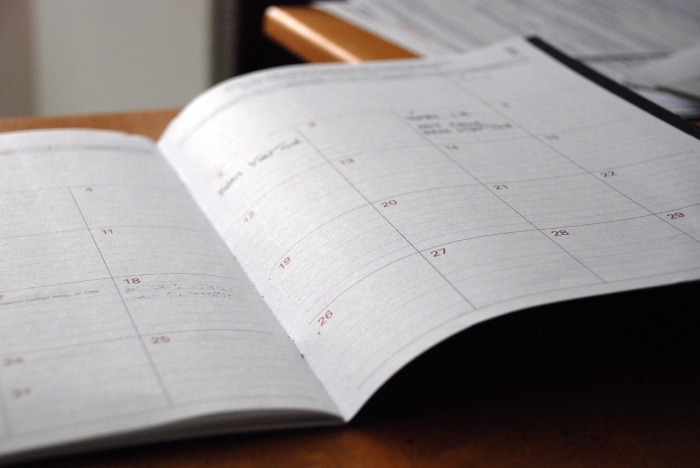
1) Buy a planner! You can literally get one anywhere such as Target and Staples. I recommend finding one that has monthly calendars at the beginning and then breaks down into weekly agendas. In the monthly calendars, I like to write down major events like exams, important assignments, class projects, social functions, athletic games, philanthropy events, etc. This way I can see when all of my main events are happening in relation to one another. It is so important to know when you might have exams and important Greek events during the same week so you can plan your study time in advance. I then use the weekly agenda to write down all of my homework, such as notes or worksheets, and all of my minor weekly meetings. This allows me to understand what all I need to get done each day while also keeping in mind what I need done by the end of each week. Understanding what you need to get done and the time frame you have to do it, is essential to being successful. While it’s important to write all of this down, it is even more important that you actually use your planner every single day. Do not let it become just another notebook that takes up space in your backpack!

day-planner-828611_1280-1


2) Decide what is mandatory and what is optional. To quote my mom, “you have to do your have to dos, before you do your want to dos.” Look at all of your obligations each month and determine which are absolutely mandatory and what are things that you simply just want to do for fun. For example, weekly chapter meeting is mandatory, class is mandatory, your chapter’s philanthropy event is mandatory. Those are all of your “have to dos.” Going to a social event, grabbing lunch with a friend, or going to an athletic game are all of your “want to dos.” Realize that sometimes you are not going to be able to do it all. If there’s a social on a Thursday, but you have an exam on Friday morning, then you are going to have to miss out on the social. Saying no to the “want to dos” that conflict with those “have to dos” is totally ok. For every event you miss, there will always be another one.

3) Ask for help. One of the best parts of being in a Greek organization is that you are bound to have class with members of your chapter. Make study groups with them! It is a great way to meet and get to know other members in your chapter while still studying for your classes. Plus, you’ll never have to pull an all-nighter alone! Another great benefit with being in such a large organization is that there are older members who have been there and done that before you. There is bound to be at least one member (if not more) who has the same major or has taken the same classes as you. Use them! They are always willing to show you which classes and professors to take or how to take notes and study for the class.

4) Most importantly, use your chapter’s Academics Chair. This is usually a member who has high academic achievement and wants to help guide others to reach their own academic achievement. Their entire position is to help you be a better student! If you are struggling in a class, they will help you seek help whether that’s from someone in the chapter or from an on-campus tutoring place. If you are nervous to get help on campus, they will probably go with you! You are surrounded by opportunity to be academically successful, take advantage of it!

Your chapter wants you to be successful in all areas of your life, but especially in your academics. Chapters love to brag and boast about all of the incredible achievements in your life. Whether that’s getting an A on the exam you thought you failed or getting into the program you dreamed of, they love seeing you accomplish your goals and will help with anything in order to get you there. Yes, it will be hard, but college is hard for everyone. It isn’t supposed to be easy. Luckily in your chapter, you will be surrounded by people who will be there to help you through the hard times in order to make them easier and to celebrate with you during the good times to acknowledge how hard you worked.

Please note that the comments of Dr. Golding and the others who post on this blog express their own opinion and not that of the University of Kentucky.

What To Do With Your Cellphone In Class?

         Sometimes I think back to the old days. I started teaching in graduate school way back in 1984 and have been a college professor teaching classes since 1988. In those early days, of course, there were no cell phones, ipads, notebooks, or laptops. Students came to class and did not have the potential distraction of an electronic device. Oh how things have changed! Now students come to class, often with multiple electronic devices, and they are ready and willing to use these devices in class. However, there is a question about how you should think about these devices, specifically your cell phone, in class.

cellphoneblogger-336371_1280         In answering this question, I want to begin by saying that myself and most other faculty use our cellphones a lot. We are heavily into them, using them all of the time to call people, text, check out the Internet, play games, etc. Thus, what I will say isn’t the case of an old faculty member who refuses to accept the innovations of the 21st century. With this in mind, just hear me out on what I think you should do with your cellphone in class.

1) In thinking about what to do with your cell phone in class, you need to first change the way you think about your attachment to your cellphone. I am sure that in certain ways you and your cellphone are “one”. However, in the classroom you just can’t be thinking about things in this way. Part of the issue is that you need to pay attention to what is being said in class, take notes, and participate in class. You are going to be limited in these activities if you are checking your cellphone every few seconds to see if you have a new text. Let me add two things about this change of thinking. First, the size of the class should not matter here, because even large classes will require you to be attentive and complete your work. Second research has shown that students understand that a classroom is an inappropriate place to use a cellphone (https://www.researchgate.net/publication/229862354_Cellular_phone_etiquette_among_college_students)

 2) Figure out a strategy that will keep you from constantly looking at your phone. For example, it might be best to put your cellphone in your backpack or in your pocket with the ringer turned off. You will be able to hear it buzz or feel the vibration (especially in your pocket) if an emergency call or text is coming through, but you are not looking at your cellphone all of the time. You might want to check, however, if having the buzzer on is OK, or if your Instructor expects your cellphone to be on silent. To me it is only reasonable to allow for a buzzer in case of an emergency (see #5 below). Will it be tough to follow this type of strategy? Of course! But, you need to stop yourself in some way, and having your cellphone out of view is very important. One other thing to point out here is that I know some people look at their cellphone a lot to check out the time; their cellphone serves as a watch. Still, you need to try and stop looking at your cellphone so much. Looking at the time will typically lead to checking phone calls, texts, and the Internet. Therefore, get used to checking the time by looking at the classroom clock.

3) Understand the rules for cellphone use that are presented in each course syllabus. It is likely the case that your Instructor will frown upon cellphone use unless it is used in conjunction with an educational app, and will state in the syllabus that you should not use it during class. This may even include telling you that you cannot use your cellphone to take pictures of material presented on the board/screen. In some cases (so I have heard) things may be much stricter, and the Instructor may include penalizing points for using your cellphone. Finally, it is possible that your Instructor will allow you to have your cellphone out, although the ringer must be off. The key is that there is almost surely going to be something in the syllabus for each of your classes about cellphones, and you need to know this information.

cellphonetexting-593321_12804) Don’t try to play games with your Instructor. By this I mean that over the years I have encountered students who either think they can “pull one on the old guy” or that I am simply “out of it”. This includes students who text with their phones on their lap. Do they think I really cannot see them? I guess not, but even in a room with 500 students you can see students texting—a student moving their hands in their lap with their head down when I am not lecturing is a dead giveaway! When your Instructor says no cellphones can be out they mean it. One caveat to all of this is that I have talked to students who make an interesting point about cellphone use. They tell me that sometimes students who pull out their cellphones are not being intentionally rude, but are doing so automatically (i.e., “texting unconsciously”)—they are not really aware that they are being rude. As a psychologist, I understand what they are saying but this can still turn into a big problem, and to me indicates all the more reason why that these students need to put their cellphone in their backpacks during class.

5) Think about the best way to use your cellphone in case of an emergency. Of course, emergencies happen and having a cellphone is just what we all need to be able to deal with the unexpected. Because of the importance of cellphones in these situations, check to be sure you can have your phone on buzzer so you can hear if an unexpected text or phone call is coming through. If your Instructor expects you to have your phone on silent, you might want to approach them and see if there is any flexibility on this rule. I am betting your Instructor will see your point of view, especially because it is likely the case that your Instructor has their phone on buzzer. On a related point, if an emergency call or text comes through, my advice is to get up quietly from your seat and go into the hallway to talk or text. You might even want to later explain to your Instructor why you had to leave the classroom.

In the end, like many other issues dealing with being in class, it is important that your cellphone use allows you to be courteous and respectful to your Instructor and your classmates. This behavior will make for a more positive classroom experience.

Please note that the comments of Dr. Golding and the others who post on this blog express their own opinion and not that of the University of Kentucky.