
With summer orientation going on for a lot of rising freshmen and transfer students I wanted to discuss an issue that is important when you choose your first classes, and that will remain critical as you continue in your college career. This is the idea of how best to select classes. As I present my thoughts on selecting classes, keep in mind (as is always the case with blog posts) that I am offering my opinion on this issue. There are bound to be others (e.g., professional advisors) who do not agree with me. But, my opinion on selecting classes is based on almost 30 years of dealing with undergraduates, including helping countless students select classes.
 To begin, I believe very strongly that the ultimate decision for which class to take or not take rests with you. This is very important, because it goes along with the idea that when you are in college you must take responsibility for your college career. Of course, there are those around you (e.g., parents, friends, professional advisors) who will be giving you advice. In the end, however, it rests with you. You can’t just sit there and have others give you a copy of a schedule while saying “Here’s a nice schedule” or “This will work best for you.” Make sure you understand what is on the schedule, and that you agree that the classes you are going to take are the ones you want and need to take.
This brings me to another critical point–there is an art to selecting classes. Each class you select must lead (as close as possible) to a perfect fit. This includes making sure you know who is teaching the class, when and where the class is taught, and finally what is the “value” of the class. Let me discuss each of these in some detail.
1) Who is teaching a class? Over and over again I hear stories from students where an advisor suggested a course, but never says anything about who is teaching the course. This is done despite the fact that the person who teaches a course is critical not only to whether you will enjoy the class, but if you will learn anything. For example, do you want a faculty member who is going to interact with the class, use various types of media, and generally be a nice person? Or, do you want someone who stand in one place in the front of the classroom, reads their lecture, and seems like teaching your class is the last thing they would like to be doing. Of course, you want the first instructor. It is that first instructor who will get you motivated to attend class and complete all work; higher grades will usually follow!
So when you select a class, check out who is teaching the class. If the course schedule says “TBD” that is not a good sign–it stands for “To Be Determined”. Often when this occurs a department may still be trying to find a part-time faculty or graduate student to teach the class. These people can turn out to be good instructors, but compared to a full-time faculty member with a stellar reputation there is no comparison. If you can find out who is teaching a class you want to take, check them out in three ways. First, ask advisors or fellow students if they know anything about the instructor. Second, many schools allow you to search faculty evaluation scores. There are scores based on surveys that students complete each semester. If you can look at these, make sure you are not signed up with someone who has low scores. Finally, there are online reviews of faculty (e.g., Ratemyprofessor.com). These websites are controversial and people complain that they are not valid. Nonetheless, I feel you have every right to give them a look and decide for yourself if a comment is just that of an angry student who is upset about their grade or that the comment has some value to you. The bottom line to me is that you should never take a class where you don’t know something about the person in the front of the room.
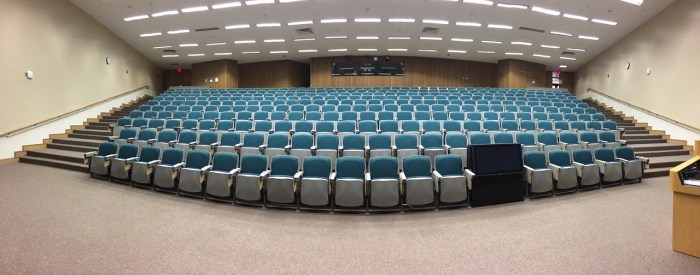 2) When and where is the course is taught? Now the two parts of this question get very tricky. Let’s start with the “when” part. As you can imagine, a school cannot have all of their class on certain days at ideal times. For many students this would be Tuesday and Thursday (TR) between 11 AM and 2 PM. Students often like a TR schedule because it allows for a 4-day weekend. The 11-1 slot means you don’t have to get up too early or stay on campus too late. The problem is that most students take 4 or 5 classes so there is really no way you can fit in everything on this TR time frame.
So now the decision-making begins. Here are two critical questions: (1) Are you willing to take classes on any day; and (2) Are you willing to take classes that start at any time of day? These are questions only you can answer, but I want to make an important point: Don’t let anyone tell you to take a class on a certain schedule that you really are not happy about. For example, if you just do not think you can get up for an 8 AM class, I believe you should not take this class. Let me add that I understand that you may have to take a class that early if it is a required course or there is simply no other time you can take a particular class. Also, there are those who argue that letting students determine when they want to take classes will lead to scheduling nightmares, again because students want to take classes at “prime” times. Finally, it is argued that when students get a job they will have very little say over their work schedule so they need to get used to taking classes at all times, early or late. Still, I believe that forcing a student to take classes at times they do not prefer decreases a student’s responsibility for their college career, and will likely lead to lower motivation and less learning.
Sorry, but I must add one last point about when you take your classes. Don’t forget to leave time in your schedule for lunch—you gotta eat!
As for the “where” part of selecting classes, this is also an important consideration. The main issue here is that you want to try and select classes in buildings close enough together that you are not scrambling to get to class. In general, there is a 10-minute break between classes. Most schools are relatively compact as far as the location of buildings. However, if you attend a large university it is quite possible that your classes will be far away. Getting to your next class may require you to leave one class a little early. If you have to do this, make sure you talk to your instructor about this. This is made tougher when the weather is lousy—think Chicago in the winter! Again, you may have no choice over where a class is located, but if you can be selective try and make sure that the buildings are kind of close. One thing you can do in this regard is to check out how long it will take you to walk between your classes.
 3) What is the “value” of the class? One could argue that every class has equal value—they are all important. However, I feel you need to be pragmatic about this point, and realize that some courses have more value than others. For example, I feel that required courses are more valuable than electives. The value of required courses is even higher for those required courses that are only offered once a year or once every other year. You need these courses to graduate so make sure you select these to take as soon as possible As far as electives, taking these is much more flexible. I realize electives may be really interesting and may not be offered on a regular basis, but it is best to take electives to fill in slots in your schedule when required courses just will not fit in.
I want to add three caveats to my position on required courses. First, don’t take a required course if it will lead to taking more credit hours than you had planned. The additional time and stress that the additional course will probably cause is really not worth it–just plan on taking the class another semester. Second, there will be a number of required courses you must take that are typically called “General Education” courses. One view about these courses is that they should be taken as soon as possible (e.g., freshman and sophomore years) so that you do not have a big delay between what you learned in high school and taking the class in college—think Math. Also, if you take General Education courses early on you can concentrate on courses in your major in your final years of college. However, others feel that there is no problem interspersing General Education courses with those of your major as you move through your college career. It’s your call on this, but I tend to side with the General Education courses throughout one’s college career viewpoint. Finally, sometimes when students select classes they use a strategy of selecting one more required course than they need. They then attend all their classes and drop the class that seems least appealing. In general, I am not supportive of this strategy, because before you drop a class you are holding the slot that another student needed.
I know this is a lot of information to think about, However, because selecting classes is so important to your college success I wanted you to have a faculty member’s perspective on this process. Good luck as you select your classes!
Please note that the comments of Dr. Golding and the others who post on this blog express their own opinion and not that of the University of Kentucky.
 It would be nice if I could simply tell you what to major in, but that decision has to be yours (no matter how much your parents think it should be their decision!). For some of you choosing a major will be relatively easy. Let’s say you want to be an accountant, you will major in Accounting. In this example, your major allows you to enter a profession upon graduating. This example is what we call a “vocational major” and it involves an applied career. Other vocational majors include Nursing, Education, Architecture, Engineering, and Journalism.
 Beginner's Guide to College Success